
Study Animal Care online – choose from our Flexible Online option or our AVT Hosted Work Placement at Landsdale Farm in WA

Years 10-12
Still at school?
Flexible study options designed for Years 10-12 students.
The ACM20121 Certificate II in Animal Care online course (formerly Animal Studies) is the best course to prepare you for a range of jobs such as an animal carer or animal attendant in a doggy daycare, kennel or cattery, stable, veterinary clinic, animal shelter or pet shop. This nationally recognised course will give you the foundation skills and knowledge to get started in the animal care industry.
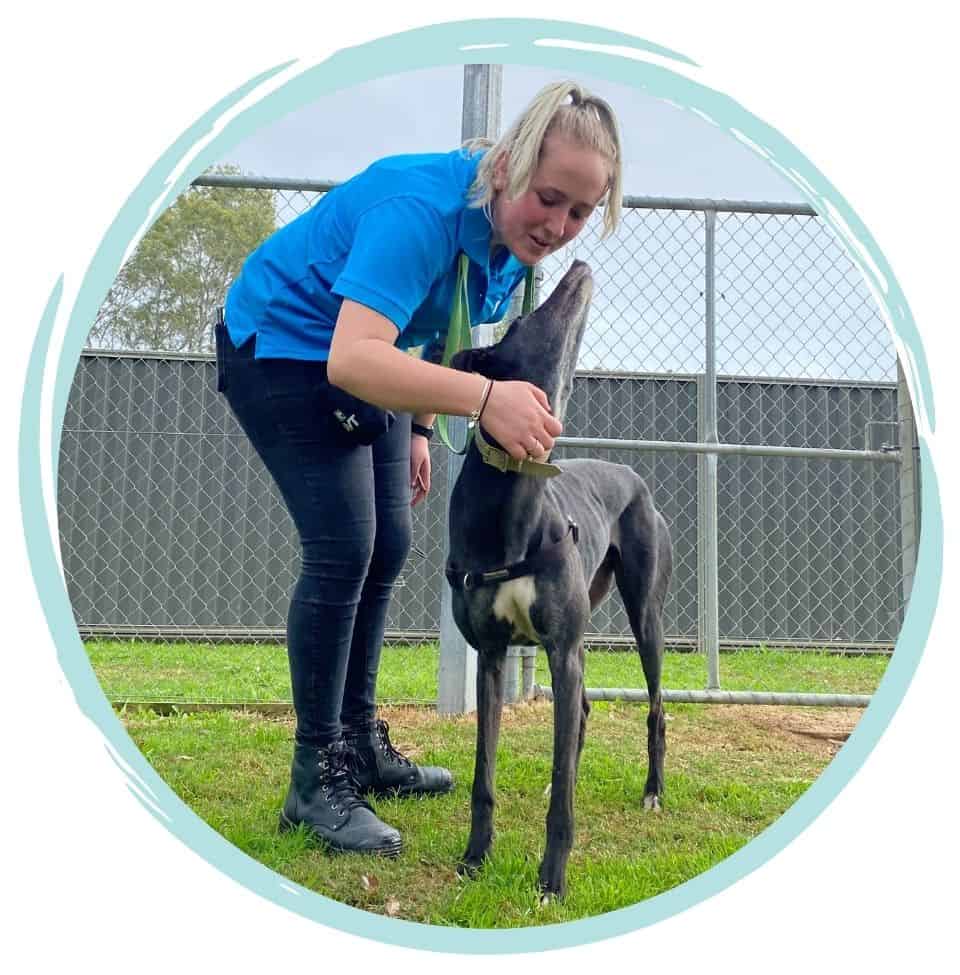
The ACM20121 Certificate II in Animal Care online course (formerly Animal Studies) is the best course to prepare you for a range of jobs such as an animal carer or animal attendant in a doggy daycare, kennel or cattery, stable, veterinary clinic, animal shelter or pet shop. This nationally recognised course will give you the foundation skills and knowledge to get started in the animal care industry.
Course Structure
Work Placement
Entry & Pathways
This course can help you meet the prerequisite for Veterinary Nursing
This flexible course is designed to fit around your life, with no classes to attend and online study available Australia-wide. As part of your course, you will complete:
As a student, you will:
A work placement is required to successfully finish this course. Here’s what you need to know:
Suitable placements include: kennels, catteries, doggy day care centres, animal welfare shelters, pet shops (with access to animals), wildlife rehabilitation centres, zoos, and veterinary practices.
For more information, see our Work Placement FAQs below or visit our Practical Work Placements in Animal Care page.
Prefer a structured option? Consider one of our Face-to-Face or On-Campus options (For WA students).
The ACM20121 Certificate II in Animal Care is an ideal starting point if you have very little or no prior knowledge or experience in the animal care industry. There are no prerequisites for entry into this course, making it a great pre-vocational course.
Students must:
The following information outlines what you can expect during the course, including the essential, environmental and psychosocial requirements. If you have any questions or concerns about these expectations, please contact our Student Support team.
Essential requirements
Throughout this course, you will need to:
Environmental requirements
In this course, you will:
Psychosocial requirements
Given the nature of work in the animal care and welfare environments, and the delivery of training within a third-party workplace, you will need to:
Assessment types
You will be assessed on your skills and knowledge in various ways, including:
When you visit your Work Placement you will be required to wear:
You will be required to wear the AVT uniform unless specified by your approved workplace.
International students, please note that we are not registered with the Commonwealth Register of Institutions and Courses for Overseas Students (CRICOS). Please visit the CRICOS website to view education providers that offer courses to people studying in Australia on student visas. We are unable to offer this course to students currently living overseas or those on a student visa. For more information visit our frequently asked questions below:
Choose the study mode you would like to explore
This flexible course is designed to fit around your life, with no classes to attend and online study available Australia-wide. As part of your course, you will complete:
As a student, you will:
A work placement is required to undertake your practical training. Here’s what you need to know:
Suitable placements include: kennels, catteries, doggy day care centres*, animal welfare shelters, pet shops (with access to animals), equine agistments centres and studs*, zoos and conservation parks, mobile animal exhibitors, educational farms, aquatic retail specialists and veterinary practices.
*You may require an additional placement to meet the minimum species criteria.
For more information, see our Work Placement FAQs below or visit our Practical Work Placements in Animal Care page.
Prefer a structured option? Consider one of our Face-to-Face or On-Campus options (For WA students).
The ACM20121 Certificate II in Animal Care is an ideal starting point if you have very little or no prior knowledge or experience in the animal care industry, making this a great pre-vocational course.
For entry into this course, you will need to:
The following information outlines what you can expect during the course, including the essential, environmental and psychosocial requirements. If you have any questions or concerns about these expectations, please contact our Student Support team.
Essential requirements
Throughout this course, you will need to:
Environmental requirements
In this course, you will:
Psychosocial requirements
Given the nature of work in the animal care and welfare environments, and the delivery of training within a third-party workplace, you will need to:
Assessment types
You will be assessed on your skills and knowledge in various ways, including:
When you visit your Work Placement you will be required to wear:
You will be required to wear the AVT uniform unless specified by your approved workplace.
International students, please note that we are not registered with the Commonwealth Register of Institutions and Courses for Overseas Students (CRICOS). Please visit the CRICOS website to view education providers that offer courses to people studying in Australia on student visas. We are unable to offer this course to students currently living overseas or those on a student visa. For more information visit our frequently asked questions below:
Study online at your own pace while completing a structured, AVT-organised hosted work placement at Landsdale Farm in Darch, WA.
Once your application has been approved, you’ll receive immediate access to your online learning materials so you can begin studying straight away.
Throughout the course, you will:
This option is ideal for WA students who want the flexibility of online study while having their practical training and work placement organised by AVT.
Take the stress out of finding your own work placement and enjoy a structured, supportive learning experience organised by AVT!
Throughout your hosted placement, you’ll have the opportunity to:
Please note: The AVT Hosted Work Placement is offered subject to availability, minimum enrolment numbers and operational requirements. Dates and delivery arrangements are subject to change.
While the hosted placement has been designed to provide opportunities to complete the practical component of the qualification, successful completion depends on each student’s individual progress and demonstration of competency. If all practical assessment requirements are not met during the hosted placement, students may be required to complete additional training through an approved work placement before their qualification can be finalised.
There are no formal prerequisites for entry into this qualification. However, applicants must:
Please note, submitting an application does not guarantee entry into the hosted placement program.
You will be required to wear:
The following information outlines the requirements of studying online and completing your practical training at Landsdale Farm. If you have any questions or concerns about these expectations, please contact our Student Support team before applying.
Essential requirements
Throughout the course, you will need to:
Environmental requirements
During your hosted placement, you will:
Psychosocial requirements
You will need to:
Assessment types
You will be assessed on your skills and knowledge in a range of ways, including:
ACM20121 Certificate II in Animal Care can help you take your first step into the animal care industry, with opportunities across clinics, shelters, kennels, grooming businesses and more.
Support veterinary teams with animal handling, cleaning, patient care and daily clinic tasks.
Help care for animals in welfare, rescue, rehoming and rehabilitation environments.
Build practical animal handling skills useful in grooming salons, pet care and retail businesses.
Care for cats and other companion animals in boarding, welfare and animal care environments.
Work hands-on with dogs in kennels, daycare centres, boarding facilities or mobile dog services.
Assist with feeding, grooming, cleaning and day-to-day care in stable or agistment settings.
Thinking ahead? Many students use this course as a stepping stone toward further study in animal care, veterinary nursing, grooming, animal welfare or behaviour.
Your course covers a range of topics relating to the principles of working in the animal care industry. You will be introduced to:
The skills and knowledge you will learn can be applied across a range of animal care facilities. For more information on careers working with animals read our article Top 8 Animal Care Careers. You can also read our tips on How to become an Animal Carer in Australia.
All students must complete the following units:
This qualification provides a pathway into ACM40418 Certificate IV in Veterinary Nursing.
Due to demand, AVT selection criteria also applies →

Monthly payment plan
Initial application fee of $260 and 11 x $235 monthly payments
Monthly payment plan
Initial application fee of $835 and 11 x $235 monthly payments
Flexible payment plans are available (weekly, fortnightly or monthly). Please contact us to discuss fee and payment plan options. All course materials or resources are included.
*Fees, inclusions and payment plan amounts are subject to change. If your application is unsuccessful, or AVT is unable to offer you a place, your enrolment deposit will be refunded in full. If you withdraw after commencing your course, our Withdrawal and Refund Policy will apply. Please refer to our policies page for full details. Concession rates are not available for this course.
** Workplace Practical Insurance Cover only applies to students undertaking practical training whilst in Australia.
Ready to get started? Simply complete our online application form. Once submitted, we’ll review your application and guide you through the next steps. Learn more about the full application process →
Flexible online option
Student organised work placement
Online + hosted work placement option
Work placement at Landsdale Farm
Ready to get started? Simply complete our online application form. Once submitted, we’ll review your application and guide you through the next steps. Learn more about the full application process →
We have a team of highly qualified Trainers and Assessors who have worked in various areas of the animal industry (take a look at our ‘Meet Our Team’ page!). Our Trainers and Assessors are always on hand to answer any questions or provide further support, explanations or clarification of any of the course material. They’ll mentor and coach you through the course material when required. You can contact our Trainers via phone, email or video call.
Animal Care Courses (Previously Animal Studies)
ACM20121 Certificate II in Animal Care and ACM30122 Certificate III in Animal Care Services (previously Animal Studies) are Online Courses except for the on-campus / on-site courses below:
For the online courses, you do not need to attend lessons. A majority of your study will take place at home, online. You will also need to attend an approved workplace to complete practical training. All assessments are completed and submitted online.
Veterinary Nursing
Our ACM40418 Certificate IV in Veterinary Nursing course is offered as online eLearning or on-campus delivery modes. If you choose our on-campus mode, you will be expected to attend classes at our campus each week throughout the term. Online students, do not need to attend classes.
Animal Behaviour and Training
ACM40322 Certificate IV in Animal Behaviour and Training is offered via blended learning. Your theory and interactive lessons are studied from home via online eLearning and virtual classroom sessions, plus you will attend group training workshops at a training facility in Perth WA.
Yes – Both ACM20121 Certificate II in Animal Care and ACM30122 Certificate III in Animal Care completed with AVT are nationally recognised under the AQF. This means they are accepted across Australia, including as entry into the ACM40418 Certificate IV in Veterinary Nursing at TAFE and similar colleges.
The units are assessed using various methods. Throughout your course you may be expected to submit assessments via the following methods:
We offer two flexible study options for our animal care courses.
You can select our self-paced online eLearning option, which includes workplace training at an approved location of your choice. Our online eLearning courses are available for enrolment year-round. To get started, simply visit the qualification pages:
We also provide on-campus and workplace blended courses for our Animal Care programs. You can choose from our Certificate II courses at Cat Haven (Shenton Park) and Dogs’ Refuge Home (Shenton Park), Landsdale Farm (Darch), our Ascot campus, or our Certificate III course in collaboration with RSPCA (Malaga).
Each course has multiple intake opportunities throughout the year. For the latest course dates, we recommend checking our timetable and key dates. To learn more about our workplace blended courses, please visit the qualification pages:
If you’re a high school student, you can also explore our on-campus course in Ascot with two intakes available annually. Please note that Year 12 students are eligible to apply for the semester one intake. For more info, please see the qualification page:
AVT offers high quality study material written, reviewed and delivered by Veterinarians, Animal Scientists and Veterinary Nurses with formal training qualifications. Our in-house training team have spent hundreds, if not thousands of hours creating course resources for our units of competency across all courses.
The difference between registered training providers’ course content across all RTOs including TAFE is often the units contained in the course and the quality of the material. There are many units that can be included in a course and training providers nominate a selection of units they will offer to students.
Our courses are broad-based and give an excellent introduction to working with animals across all species. They provide a fantastic opportunity to learn about many different animals and most importantly allow you to apply what you learn from our online course material or in the classroom to the workplace.
To find out more about the units offered within each course visit the Course Content section on our qualifications pages.
The table below details the duration and maximum allowable time you can take to complete our courses. Our online courses are self-paced, meaning you can obtain your qualification much sooner if you wish to as long as all assessments and training have been successfully completed.
Extensions are available on a case by case review. For more information about extensions please visit our Student Policies page.
We do not hold a formal Open Day, however we often attend careers expos and events organised by schools. Throughout the year we conduct information sessions which are offered by invitation. If you are interested in attending one of these sessions please contact us.
To get the most out of your studies, you’ll need a reliable device that you feel confident using. Throughout your course, you’ll be accessing online learning platforms, submitting assessments, downloading resources and working with standard software, so having the right setup will make everything smoother.
We strongly recommend using a laptop, rather than a tablet, as this will give you the best experience when completing assessments and accessing course materials.
While both Windows and Mac devices can be used, we suggest Microsoft Windows as the preferred operating system, as it offers the smoothest compatibility with the software and platforms used throughout your course.
Recommended device specifications
Required software
Additional capabilities (maybe required for some courses)
The application process for ACM20121 Certificate II in Animal Care (Online) and ACM30122 Certificate III in Animal Care Services (Online) is simple. Here’s what to expect:
When will I receive my login details?
You’ll receive your login details after completing the LLN quiz and once all required documents and payments are accounted for. This process can take up to 3-5 business days from your application submission.
Can I set up a payment plan?
Monthly payment plans are standard for the course and set up to debit from the card details used to pay your enrolment fee. Modifications can be made to these payment plans at any time, please reach out to our friendly team. We’re happy to help.
Do I need to organise work placement now?
Flexible Online option
You can start your online coursework before securing a work placement. However, you’ll need to arrange an AVT-approved workplace before completing the practical component of your qualification. We recommend starting your search early to help keep your studies on track.
Online + AVT Hosted Work Placement
No. If you’re enrolled in the Hosted Work Placement option, AVT will organise your practical training at Landsdale Farm. You’ll complete structured practical learning and assessment activities with an AVT Trainer and Assessor during your scheduled placement sessions.
Please note that while the Hosted Work Placement is designed to support students in completing the practical component of the course, some students may require additional practical experience through an AVT-approved workplace if all competency requirements are not met during the hosted program.
If you’ve applied for the Online + AVT Hosted Work Placement option
Your application will also include a review to ensure you understand the commitment involved in attending Landsdale Farm each week and that the Hosted Work Placement is the right study option for you. As places are limited, eligible applicants may also be contacted to discuss their application before a final offer is made.
The LLND quiz assesses your Language, Literacy, Numeracy and Digital skills to understand your abilities and ensure you have the correct support for your studies.
All AVT qualifications have been evaluated against the Australian Core Skills Framework (ACSF) to determine the level of core skills required for successful participation in each course. Rather than simply evaluating general study readiness, the LLND ensures that you have the specific skills needed to meet the demands of your chosen course.
As a Registered Training Organisation (RTO), AVT is required by the Australian Skills Quality Authority (ASQA) to assess and provide evidence of a student’s language, literacy, numeracy and digital skills (LLND) prior to confirming their enrolment. For this reason, we have incorporated the LLND quiz as a compulsory step in our enrolment process.
Unfortunately, due to regulatory requirements, we must assess your language, literacy, numeracy and digital skills using the Australian Core Skills Framework (ACSF). This means all students are required to complete the current AVT LLND quiz, regardless of prior qualifications.
All applicants will be emailed a request to complete a quiz, which is conducted online and completed from home. We recommend carefully reading and answering each question rather than rushing through the quiz. Please note, students completing our VETDSS on-site course are required to complete a supervised LLND at school.
You’ll receive the link to complete your LLND quiz within 1–2 working days after we receive your application. Keep an eye on your email for the link. Once it arrives, you can complete it online at a time that suits you. Please note, students completing our VETDSS on-site course will have their LLND organised with their school.
This is an example Certificate II level LLND question:
Read the following text message and answer the questions:
“Hi Jenny, I’m at Tony’s Farm now but I’ll see you at the front gates of Landsdale Farm at 3pm for the hay delivery. From Sharon”
An independent organisation evaluates this quiz to determine if your current core skills meet the required level for the course. If you are a successful applicant and minor skill gaps are identified, you will be provided with the necessary support to develop the required skill level throughout the course.
You may not be suitable for a course if a significant core skill gap is identified. In such instances, you may be referred to an alternative study pathway or external support services to develop these core skills.
Once you’ve completed your LLND (Language, Literacy, Numeracy and Digital Skills) quiz, our team will review your results. You won’t receive individual results, but we will only contact you if there’s a significant gap or if we believe you may benefit from additional support.
As part of your course, you’ll be completing video based assessments. The photo you upload simply helps us confirm that the person submitting the video is the enrolled student. It’s used for identification purposes only and is kept on file for reference throughout your studies.
There’s no need to upload a passport or driver’s licence photo, just a clear ‘selfie style’ photo is perfectly fine.
If you have any questions or concerns, please contact our Student Support team.
A USI is your individual education number for life. It also gives you an online record of your vocational education and training (VET) undertaken in Australia.
To complete nationally recognised training, you need a USI. Without one, you can’t get your qualification or statement of attainment.
How do I get a USI?
Getting a USI is quick, easy and free. Follow the steps on the USI website.
Many of our Animal Care students, unless employed at a suitable workplace, complete their required hours in a voluntary position, such as volunteering at an animal or wildlife shelter or an animal-related business.
Prior to commencing your work placement, your prospective supervisor will need to submit a Work Placement Approval Kit. Once received, our Student Liaison Officer will assess the organisation to ensure it meets the workplace criteria for your course, including access to tasks, systems and processes, equipment and even species of animals.
For our ACM20121 Certificate II in Animal Care online students, you have flexibility in how you structure your work placement. As a guide, plan to complete around 100 hours of practical training – approximately one day a week for 3-4 months, or 12-15 full work days. This may vary depending on your prior experience working with animals and the skills and knowledge you already have.
Your placement can be completed:
Your course is organised into two study blocks, so it’s a good idea to review your Assessment Schedule and practical requirements before scheduling all of your placement hours. Some practical activities may only be completed once you have covered the relevant theory or when a suitable opportunity arises in your workplace.
Cassie is completing her placement at Trudy’s Dog Resort. She starts with a two-week block during the school holidays, giving her plenty of time to work on practical activities from her first study block.
Looking ahead at Block 2, Cassie notices that one assessment requires her to demonstrate a specific skill. She knows finding the right animal and opportunity during a short placement block could be difficult.
Cassie saves her remaining placement hours and attends one day per week during Block 2, giving her more opportunities to complete this and her other practical assessments.
What’s important is that your placement gives you enough opportunities to complete the practical activities and assessments required for your course. You should continue attending your workplace until all required Practical Task Worksheets and Workplace Assignments are completed, even if you have already completed around 100 hours of placement.
Self-organised work placements are only required for selected courses and delivery methods. As a general rule, our intensive, on-campus or on-site courses do not require you to organise a work placement. For more information, please refer to the relevant Work Placement information, located in the Course Outline section of the corresponding course page.
Special note for ACM40418 Certificate IV in Veterinary Nursing students: Only regional WA (non-funded) and non-WA students are required to organise their own work placement.
If you are required to organise your own placement, you will be required to:
If your work placement is not approved by AVT, and it is unsuitable for the purposes of this course, then any hours already completed there will not contribute to the completion of this qualification or any of the units of competency. That’s why, it’s important to receive written confirmation from us before you get started! 👍
As part of the ACM20121 Certificate II in Animal Care, your work placement must provide access to:
This is a requirement of the national training package to ensure students develop well-rounded skills that reflect real-world workplaces.
If you are completing one of our online animal care courses, your work placement must provide access to at least two companion animal species. These may include dogs, cats or other animals that are individually handled and cared for, such as a pony or chickens kept at an educational farm.
The two required life stages can be represented across the two species. For example, you could work with a juvenile cat and an adult pony.
Animal care professionals often work in environments where they encounter a wide variety of animals. Working with more than one species and different life stages helps prepare you for real-world animal care environments, where no two days, or animals, are the same.
By meeting this requirement, you will:
If you’re unsure whether your placement meets the two species and life stage requirements, our Student Support Team can guide you before you begin.
Different RTOs may list lower workplace hours because they may choose different units or structure their work placement differently. For example, in ACM30122 Certificate III in Animal Care Services (Online), our 250‑hour guideline reflects the type and volume of units we deliver, which involve a strong emphasis on animal contact, handling, care and safety.
This recommendation is especially beneficial for students who are new to the industry or have limited animal experience. The actual time you need will depend on your existing skills, knowledge and confidence. Some students become work-ready more quickly, while others need the maximum hours (or even more) to feel truly competent.
Our guideline is intended to support you – not create a barrier. It ensures you have enough real experience to be genuinely work ready, confident and safe in an animal‑related workplace. It also helps you develop the hands-on skills you need to reinforce and apply your theoretical learning.
The training package outlines the skills and knowledge you must demonstrate but does not specify how many hours you should spend in a workplace. This gives RTOs flexibility to design their courses differently.
Look for information about:
Our higher placement hours for online courses mean:
All of our courses are vocational, which means that they are specifically designed to provide students with the skills, experience and knowledge to enter the animal care workplace. Working in an animal care facility, where you are responsible for a number of different animals and sometimes a range of different species on a daily basis is very different to caring for your own pets at home.
Therefore to successfully complete your qualification you will need to secure a formal workplace practical training placement in a animal related business or organisation. If you are completing our veterinary nursing qualification, you will need to complete your placement in a veterinary practice.
Below are just a few examples of the types of skills and knowledge that must be covered in all of our courses, which cannot be learned from caring for your own animals –
Yes, you can complete your practical training at more than one workplace if the opportunity arises. While it’s not required, gaining experience at two different organisations can be really beneficial and give you a broader range of skills. We recommend keeping it to a maximum of two workplaces so you can get the most out of each experience.
Finally, we require a ‘Workplace Approval Form’ for each placement to ensure the suitability of the placement for your studies.
You will receive a Practical Task Workbook containing a logbook and all the practical assessments you must complete during your placement.
Practical assessments include ‘Workplace Assignments’ that include activities such as case studies, photographs, written descriptions of workplace procedures and video evidence of practical tasks. These assessments are designed to see how well you can apply the information covered in the theory component of each unit.
Each unit also includes ‘Practical Task Worksheets’ outlining various tasks that you are expected to complete during your placement, with each task signed off by a supervisor once successfully completed. All practical assessments must be submitted to us via our online learning platform for assessment by one of our tutors.
A student attendance record is also included in the Workbook and your supervisor must sign this to confirm that you have completed the required number of hours during a placement.
During your placement, we will contact your supervisor to obtain feedback on your performance. This feedback will then be relayed to you.
If you live in Australia and your work placement is also based in Australia, you’ll be covered under AVT’s Voluntary Workers Policy. This insurance applies if you’re injured during your placement and includes accident-related costs that exceed any applicable Medicare benefits.
If you’re injured and require medical treatment, you’ll need to visit a General Practitioner or hospital as a general public patient. It’s important to let the doctor know that you’re a volunteer and that the injury is not covered under Workers’ Compensation. If you have any out-of-pocket expenses that aren’t covered by Medicare, you can make a claim through AVT.
Quick Example
While completing her logged hours at ABC Dog Boarding Kennels, Mia strained her lower back while lifting a dog into a grooming tub. She attended a GP as a public patient and let them know she was a volunteer, so Workers’ Compensation does not apply. Medicare covered part of the treatment, and any additional out-of-pocket GP or therapy costs, such as physiotherapy, could be claimed under AVT’s Voluntary Workers Policy.
AVT also provides public liability insurance of up to $20,000,000, which covers third-party injury or property damage you may accidentally cause during your placement.
Certificate of Insurance: AVT’s Certificate of Currency
Important note for ACM20121 Certificate II in Animal Care (Internship: Vet Nurse Program) students: If you are completing your work placement with Greencross Vets, you will be insured under Greencross Vets’ insurance policy. This means AVT’s insurance does not apply to your placement with Greencross.
Your training pack is included as part of your course and contains the key materials you need for your studies and practical training.
This may include:
When you receive your pack depends on your study mode:
This ensures you receive your materials at the right time to support your practical learning.
We follow the national training package for all qualifications. The latest version of the training package can be viewed here. Training.gov.au is the Australian Government Website for registered training courses and providers.
Yes. Applied Vocational Training (AVT) is a Registered Training Organisation (RTO 5273) offering nationally recognised qualifications in Animal Care, Veterinary Nursing and Animal Behaviour and Training.
AVT is registered with the Australian Skills Quality Authority (ASQA), the national regulator for vocational education and training providers in Australia. You can verify AVT’s RTO registration and scope of nationally recognised training on the Australian Government’s training.gov.au website.
Our nationally recognised qualifications include:
Our course materials are developed and regularly reviewed by our team of veterinary, animal science and training professionals to ensure they remain relevant to current industry practice.
AVT is also a VNCA/AVNAT Education Partner, and works with industry organisations including the Institute of Modern Dog Trainers Australia (IMDT).
Before enrolling in any nationally recognised training course, we recommend checking the provider and qualification on training.gov.au, the Australian Government’s National Training Register. Search for Applied Vocational Training or RTO 5273 to view AVT’s current registration and scope of training.
View Applied Vocational Training (RTO 5273) on training.gov.au
For our online courses requiring an application fee during the enrolment process, the fee will be refunded if your application is unsuccessful.
WA-based students may be eligible for a government-subsidised place under the Jobs and Skills WA initiative. You can find out more information by visiting our Government Funding Page.
Unfortunately we do not have funding outside of WA.
AVT courses are not eligible for Government HECS-HELP or VET Student Loans (formerly VET FEE-HELP).
HECS-HELP is a scheme that assists eligible Commonwealth supported students to pay their student contribution amount with either a loan or a discount for certain up-front payments. HECS‑HELP loans are available at all public universities and at a handful of private higher education providers.
VET Student Loans is an Australian Government loan scheme to assist eligible students studying diploma level and above qualifications to pay their tuition fees. There are no Government loans available for Certificate IV and lower levels of study including those offered at AVT.
To find out if you may be eligible for alternative support such as Youth Allowance, we recommend contacting Centrelink .
We offer flexible monthly payment plans with instalments for all students. We do not require upfront full payment for any of our courses. Total course fees and payment plan structure vary with each course and individual circumstances. Visit the relevant qualifications page for more information or contact us for further details.
Unfortunately, government funding and concessions are not available for AVT’s online courses.
Concession fees and government-funded places are only available to eligible students enrolling in selected on-campus courses under the Jobs & Skills WA funding initiative.
For more information and links to eligible courses, visit our Government Funding page.
If you are in Australia on another type of visa, your eligibility to study depends on the specific conditions attached to your visa. AVT is not able to enrol students in nationally recognised qualifications on a student visa.
Other visas – Some registered training organisations (RTOs), including AVT, may enrol non-resident students who are temporarily visiting or living in Australia on certain visas other than a student visa. See important information about Jobs & Skills WA Funding eligibility including visa eligibility.
Restrictions – Many visas include limits on study or training. Your study and work rights are linked to your visa type.
Your responsibility – You must check your individual visa conditions before applying. Further information is available from the Department of Home Affairs.
Courses shown below are subsidised under the Jobs & Skills WA funding program. Eligibility including visa eligibility, vary by course. Please refer to the links below for details:
ACM20121 Certificate II in Animal Care – Eligibility details for each stream:

ACM30122 Certificate III in Animal Care Services (RSPCA) – Eligibility details >>
ACM40418 Certificate IV in Veterinary Nursing – Eligibility details >>
Related FAQs:
Unfortunately, we cannot assist individuals studying as international students as we do not hold the required CRICOS (The Commonwealth Register of Institutions and Courses for Overseas Students) registration.
You may find CRICOS registered training institutions in Australia that can offer qualifications to international students. Some TAFE (Technical and Further Education) institutions hold CRICOS registration and offer Animal Care and Veterinary Nursing courses.
Related FAQ’s:
Tags: international, overseas, visa, CRICOS
AVT is not able to accept international students wishing to study on-campus in Australia on a Student Visa. To enrol students on a Student Visa, training providers must be registered with CRICOS (The Commonwealth Register of Institutions and Courses for Overseas Students). AVT does not hold this registration.
If you wish to study on-campus in Australia with a Student Visa, you will need to apply through a CRICOS-registered provider. Some TAFE (Technical and Further Education) institutions are CRICOS-registered and may offer qualifications in Animal Care and Veterinary Nursing.
Related FAQ’s:
Tags: international, overseas, visa, CRICOS
AVT is not able to accept applications for online qualifications from students who reside outside of Australia.
All AVT qualifications require students to learn and demonstrate knowledge of Australian legislation, regulations and industry standards, as well as apply these in practical settings. Because these requirements differ from those in other countries, we are unable to assess and recognise competence for students living overseas.
Related FAQ’s:
CRICOS (The Commonwealth Register of Institutions and Courses for Overseas Students) is the Australian official register of training providers approved to deliver courses to international students on a Student Visa. Any qualification undertaken by a Student Visa holder must be listed on CRICOS and delivered by a CRICOS-registered provider.
In some cases, a registered training organisation (RTO) may enrol students who are temporarily visiting or living in Australia on other types of visas (not a Student Visa). However, many visas include restrictions on study or training. It is each individual’s responsibility to check their visa conditions to confirm their study and work rights. You can verify these with the Department of Home Affairs.
Related FAQ’s:
Tags: international, overseas, visa, CRICOS
Recognition of Prior Learning (RPL) is available to enrolled students of AVT qualifications. The prior learning may be in the form of previous studies or completed qualifications (including superseded qualifications), on the job experience or volunteer work.
To find out more detailed information about RPL visit our RPL page.
In meeting the required rules of evidence and principals of assessment, AVT is unable to provide recognition of prior learning (RPL) to candidates who can not demonstrate recent and current skills and knowledge.
Applicants need to be able to demonstrate that they meet the competency requirements of the current training package including application of current industry techniques using the latest technology, equipment and supplies in accordance with the current standards and regulations.
If you wish to gain certification as a veterinary nurse or animal carer without having current experience, you will need to enrol in and complete the full course.
Yes. You can use units of competency received from a prior qualification even if the unit is different from an elective unit required by AVT. You can claim a credit transfer (CT) for these units as long as:-
If this is the case, then you may use previous units of study to fulfil the elective component of the qualification.
You will be required to provide us with a Statement of Attainment from a recognised and approved training provider at the time of application. We will verify your previous studies with the training provider.
For information about fees and charges that apply to credit transfers, please see our student policy page.
Please note, we are unable to offer RPL or Train and Assess any other elective unit of competency other than the ones provided in the courses offered on our website.
For a full list of our qualifications visit our Qualifications Overview page
Students with eligible credit transfers may apply, however, due to the course delivery format, 100% attendance is required for induction and practical training/on-site days and therefore full course fees will apply. Credit transfer fees do not apply for Jobs and Skills WA funded students.
Yes. If you have completed and passed the exact same unit as delivered by AVT, you will receive a credit transfer for the unit. You must be deemed competent and be awarded a PASS in the unit.
At the time of application, you will be required to provide us with a Statement of Attainment from a recognised and approved training provider. We will verify your previous studies with the training provider.
For information about fees and charges that apply to credit transfers, please see our student policy page.
Credit transfer fees do not apply for students who have completed a previous qualification with AVT.
To receive a credit for a unit of competency that you have previously been awarded, you must be able to supply a verifiable Testamur (certificate) or Statement of Attainment obtained from the issuing provider.
A Testamur or Statement of Attainment must either contain the wording ‘The qualification is recognised within the Australian Qualifications Framework’ or the AQF logo authorised by the AQF Council.
A Record of Results or Statement of Academic Record by itself is not sufficient when applying for a credit transfer of a nationally recognised unit of competency.
If you do not have a copy of your Testamur or Statement of Attainment you are responsible for requesting a copy from the issuing provider, we are unable to do this on your behalf.
For more information about RPL see our frequently asked questions here.
Credit transfer and recognition of prior learning (RPL) are two methods to receive credit towards your course, but they differ in how credit is awarded.
Credit transfer is available if you have previously completed the same unit, or one that matches in content and outcomes, at another recognised VET or higher education provider. To apply, you must provide verifiable evidence, such as a Statement of Attainment or qualification certificate, proving your competency. Once approved, you will not need to repeat assessment for that unit.
Please note that many of AVT’s courses are clustered. Clustering involves delivering and assessing two or more units together in groups (or blocks), in a meaningful and purposeful way. It avoids duplication and repetition and creates a logical flow to the delivery of your course. As a result, you may still need to complete training and assessments that cover similar concepts found in the unit for which you’re requesting a credit transfer
Recognition of prior learning (RPL) on the other hand, allows you to be assessed on the skills and knowledge you’ve gained through previous training, work experience, or life experience. To apply for RPL, you must supply evidence, such as records of completed training, assessment items, or declarations from your employer. Your provider will then assess your competency against the requirements of the course to determine if further training or assessment is needed.
Both options can reduce your study load, but RPL assesses existing skills, while credit transfer recognises previously completed qualifications.
For more information about AVT’s process for credit transfer and recognition of prior learning, please see our policies page.
AVT is an independent animal care focused Registered Training Organisation (RTO). We do not have third-party arrangements with other training providers to acquire content or distribute qualifications. All course material is written and delivered by our team of qualified Trainer and Assessors.

Because we specialise in animal care, behaviour and veterinary training - everything you will learn is based on real industry needs and demands!

91% of AVT graduates are satisfied with their training experience, and 83% were employed after training (NCVER, 2025).

Students consistently tell us how supported they feel. Our trainers are here to guide you and answer your questions and help you stay on track.
Answer our quick checklist to ensure your application is processed