
Home » Short Courses » Horse Care Fundamentals
Whether you’re new to horses, already caring for them or considering a future in the equine industry, our Horse Care Fundamentals Short Course provides a comprehensive introduction to horse care.
Explore horse behaviour, safe handling, daily husbandry, nutrition and health through flexible online learning that fits your schedule.
Developed by equine professionals, this course brings together practical, industry-relevant knowledge to help you better understand horses and their care requirements.

VNCA AVNAT recognised continuing professional development.
Delivery & Assessments
Explore horse behaviour, welfare, husbandry and health through ten online chapters. No classroom attendance or work placement required.
Access your studies anytime through our Online Learning Platform, featuring interactive resources, videos and online assessments.
Complete online quizzes to check your understanding as you progress through the course.
Completion Time
Study at your own pace. Your completion time will depend on your experience and the hours you dedicate to learning.
You’ll have up to 6 months to complete the course, allowing flexible study around work, family and other commitments.
Anyone looking to pursue a career working with horses.
Veterinary nurses and animal care professionals interested in expanding their knowledge of equine care.
Equine industry workers and volunteers wishing to build on their existing knowledge of horse care and management.
Horse owners, property owners and leisure riders seeking a better understanding of horse health, nutrition, handling and husbandry.
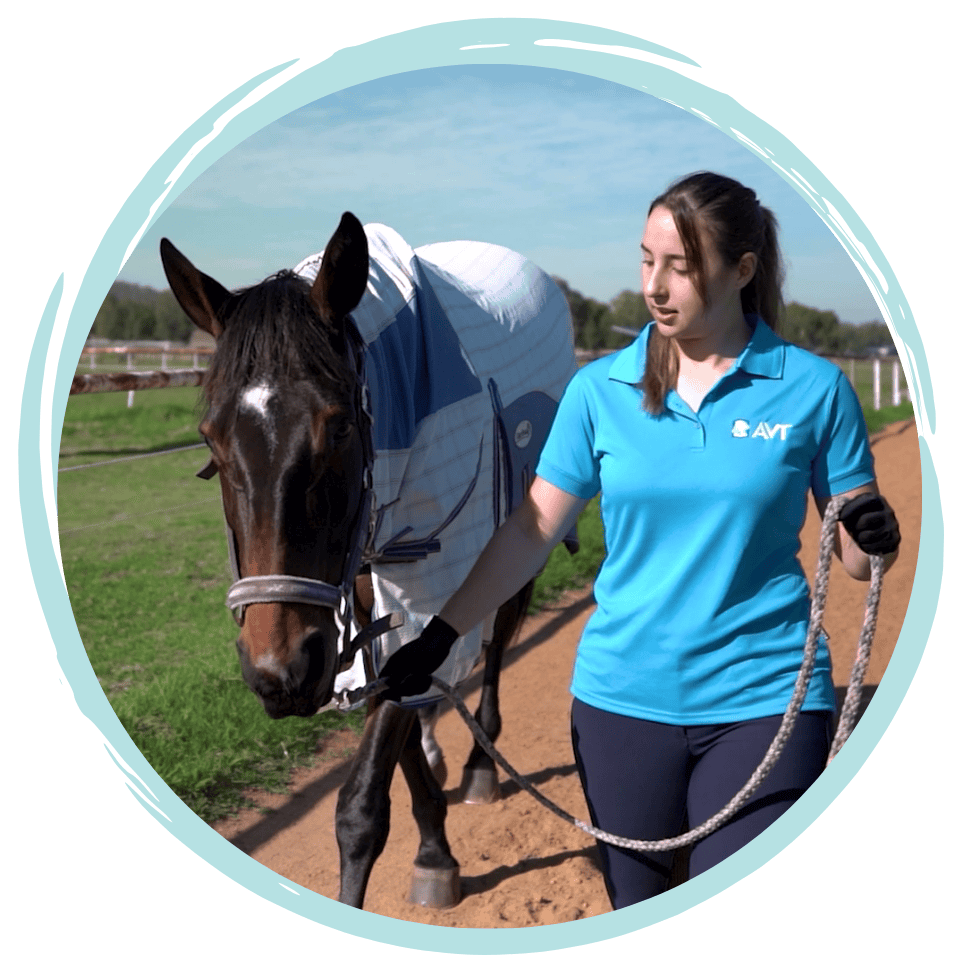
You don’t need any previous horse care experience to enrol. The course content is written at approximately a Year 9-10 reading level, with technical terms explained along the way.
The knowledge you develop can support your personal interests, existing work or volunteering, or help you explore future opportunities in the equine industry.
You will complete 10 chapters online, covering a broad range of equine topics relating to the principles of working in the equine industry. You will be introduced to:
You can apply the knowledge you learn across a broad range of horse care facilities. For more information on jobs and careers in this industry, read our article Ten Rewarding Careers that Involve Working with Horses.
Discover potential career paths within the horse industry. This chapter sheds light on topics such as animal welfare, biosecurity, and the transmission of zoonotic diseases in horse care facilities.
Learn how horses’ innate behaviours, including the flight response, social structures within herds, special senses, and communication, shape their interactions. This chapter also delves into problem behaviours.
Develop a comprehensive understanding of workplace health and safety, covering hazards, risks, and emergencies specific to horses and their care facilities. It includes safe handling techniques such as approaching, catching, leading, tying up, and releasing horses, as well as horse restraint and transportation.
Gain a foundation of knowledge on horse breeds and types, along with points, different gaits, and methods of identification based on sex, coat colour, and markings, both natural and acquired.
Explore various housing options like stables and paddocks, discussing appropriate bedding, stable routines, agistment, and Australian regulations pertaining to horse keeping.
Understand the importance of grooming, foot care (including the application of boots and bandages), hosing, clipping, rugging, exercising, and maintenance of tack and saddlery equipment in routine horse care.
Identify horses’ complex nutritional needs, including digestive anatomy, food types, handling, storage, body weight and condition assessment, and formulation of daily rations.
Learn the essential factors for horse health, methods of assessment, vaccination schedules, and common health concerns like lameness, colic, dental issues, and parasitic infections.
Learn how to assess horse conformation and suitability for specific purposes based on conformation, action, breed, type, and other characteristics.
Explore the basics of how to safely lunge an educated horse, including equipment, techniques, and troubleshooting strategies.
"The trainers and assessors are experienced professionals in the industry and they pull from first-hand experience along with always being updated to the gold standards of the practice. They are continuously updating their references and teaching materials as the industry expands."
- Amariah P (Google Review)
* Inclusions are subject to change. If you decide to withdraw from study for any reason, refunds are not issued. Please see our policies page for full details.
Your enrolment and payment are processed
You will receive login details and access to course materials
Learn with confidence through expert-developed online videos and easy-to-follow study materials that help bring theory to life.
Access your course with low monthly payments, making it easier to invest in your future.
Enjoy the freedom to study at your own pace.
Add a practical horse care course to your resume and increase your opportunities in the horse care and equine industry.
Approved under the AVNAT Registration Scheme, this course earns you 10 CPD points with the Veterinary Nurses Council of Australia.
Whether you’re in the city or the outback, our online platform brings expert-led training to you.
The Horse Care Fundamentals short course has been designed for flexible online delivery allowing you to learn at your own pace. You’ll dive deep into the world of horses through interactive modules, real-life scenarios, and online experiences. It’s a flexible format that lets you learn at your own pace in your own time.
No work placement is required – this course is 100% online, making it a flexible and accessible option for anyone interested in learning more.
This format lets you build your knowledge in a way that suits your lifestyle.
This FAQ relates to the following short courses: Horse Care Fundamentals and the Australian Wildlife Care Short Course
The Horse Care Fundamentals short course is non-accredited, so it doesn’t meet the formal entry requirement for the Equine Veterinary Nursing course.
The Equine Veterinary Nursing course is an advanced program that builds on the skills and knowledge of qualified veterinary nurses who are ready to expand their skills into the equine field.
To enrol, you’ll need to have completed a Certificate IV in Veterinary Nursing or hold an equivalent qualification. This ensures students have the clinical background needed to successfully take on equine nursing responsibilities.
If you’re passionate about working with horses, this short course is a valuable way to develop your understanding of horse care. It’s a great addition to your resume, whether you’re preparing for further study or you’re a veterinary nurse or animal care professional looking to expand your knowledge in equine care.
As the Horse Care Fundamentals is a non-accredited short course, it does not meet the prerequisite for the ACM40418 Certificate IV in Veterinary Nursing.
To apply for Veterinary Nursing, you must have any one of the following prerequisites:
This short course is non-accredited, which means it doesn’t form part of a nationally recognised qualification. However, it has been expertly developed by industry professionals to give you valuable knowledge and confidence in horse care.
While not accredited, this course is a great way to build your skills, explore your passion, and boost your resume in the animal care field.
AVT offers two types of short courses:
View our full list of Short Courses →
For students living outside Australia:
To get the most out of your studies, you’ll need a reliable device that you feel confident using. Throughout your course, you’ll be accessing online learning platforms, submitting assessments, downloading resources and working with standard software, so having the right setup will make everything smoother.
We strongly recommend using a laptop, rather than a tablet, as this will give you the best experience when completing assessments and accessing course materials.
While both Windows and Mac devices can be used, we suggest Microsoft Windows as the preferred operating system, as it offers the smoothest compatibility with the software and platforms used throughout your course.
Recommended device specifications
Required software
Additional capabilities (maybe required for some courses)