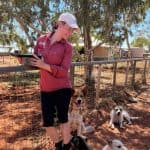


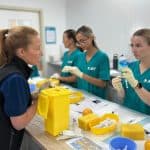
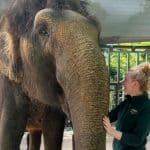
AVT graduate Aimee shares her journey into rehabilitation and remote veterinary nursing community work
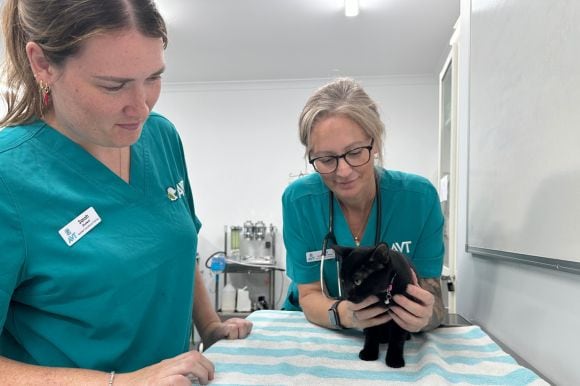
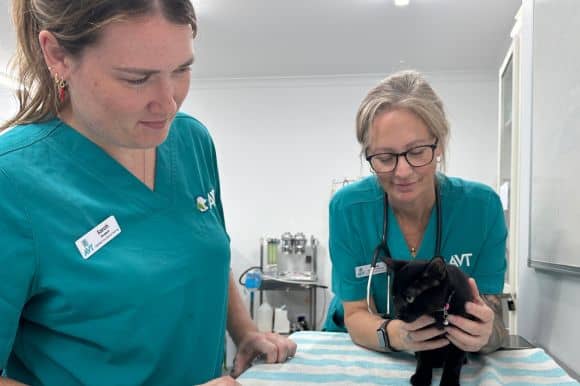
Veterinary nursing is a profession that can open many doors, and Aimee, who completed her Certificate IV in Veterinary Nursing with AVT in 2016, is a wonderful example of just how diverse those pathways can be.
Since graduating, Aimee has built an inspiring career that combines clinical nursing, canine rehabilitation, community outreach and education! Today she is a
- Registered Veterinary Nurse (RVN)
- a Certified Canine Rehabilitation Practitioner (CCRP)
- a Project Vet Nurse and Educator with Animal Management in Rural and Remote Indigenous Communities (AMRRIC), and
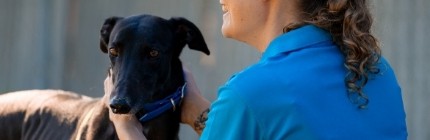
- the owner of All4, where she runs puppy classes and provides mobile canine rehabilitation services around Perth.
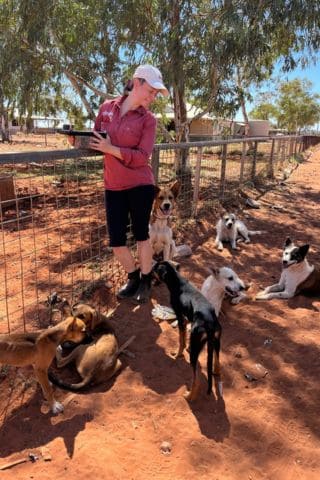
In this graduate story, Aimee shares her journey and the many directions a veterinary nursing career can take.
Building a career after AVT
“After graduating from AVT, I spent a couple of years working with shelter dogs while also learning the ropes in a fantastic general practice with an incredible team,” Aimee says.
From there, Aimee continued to build her skills, moving into emergency and critical care while also beginning her journey into canine rehabilitation. Along the way, a veterinary colleague introduced her to opportunities working in remote Indigenous communities.
Today, she works with Animal Management in Rural and Remote Indigenous Communities (AMRRIC), alongside running her own Perth-based business teaching puppy classes and providing mobile canine rehabilitation services.
Passion for rehabilitation and community work
Aimee’s career is now a combination between remote veterinary work and canine rehabilitation.
“I think what attracted me to remote field work is the same thing that drew me to emergency medicine. I love being challenged in busy, ever-changing environments, no two days are the same, and I love that.
Canine rehabilitation, on the other hand, grew from a much calmer place. In my first practice, the vet I worked with performed some orthopaedic surgeries, and I became curious about the aftercare these dogs received. I saw space for me to support them in a way that could make a real difference to their recovery.”
For Aimee, supporting the people behind the patients is just as important. “It allowed me to help owners through what can be incredibly emotional and stressful times, when their animals are confined, restricted, and they often feel powerless. Supporting both the dog and their human has been one of the most rewarding parts of my work,” Aimee says.
“Some of the best opportunities come when you step out of your comfort zone, so try everything and think outside the box.”
The moments that make it all worthwhile
Over the years, Aimee has experienced many moments that have reminded her why she chose this career.
“I try to really sit with them, to appreciate how far I’ve come. The first few years as a Vet Nurse can be incredibly challenging, and it’s easy to forget to pause and acknowledge progress.
When I’m rehabilitating dogs that weren’t able to walk before, the moment they finally get up is honestly hard to describe. The families are overwhelmed with joy and feel so empowered, they trusted the process even when it was hard, even when others might have given up. These owners are incredibly dedicated, and the way they persist in these moments is why I do what I do to help them.”
Working with AMRRIC in remote communities
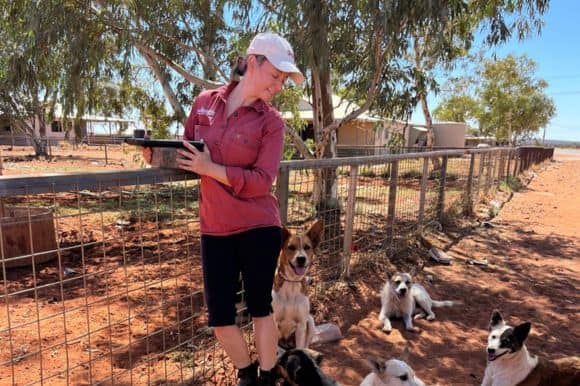
Aimee’s work with Animal Management in Rural and Remote Indigenous Communities (AMRRIC) began somewhat unexpectedly.
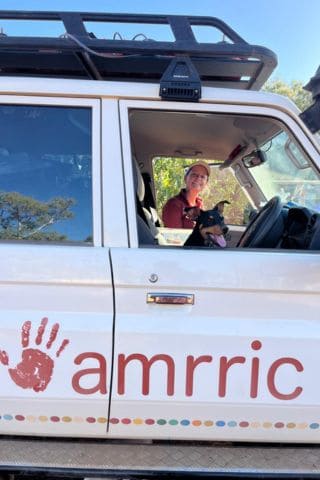
“I’d volunteered internationally once before, but before my first trip with AMRRIC, I didn’t really know opportunities like this existed within Australia. During COVID, a vet I’d worked with years prior asked me (by chance) if I was interested, because AMRRIC was having trouble getting nurses from their Darwin office over to the WA border.”
It’s not a very dramatic story, but that first trip was unforgettable. I worked with the vets to desex over 100 animals, and it was the most chaotic, exciting experience I’ve had as a nurse. So naturally… I went back again, and again!”
Making a difference in remote communities
Working in remote communities comes with challenges, but the rewards are significant.
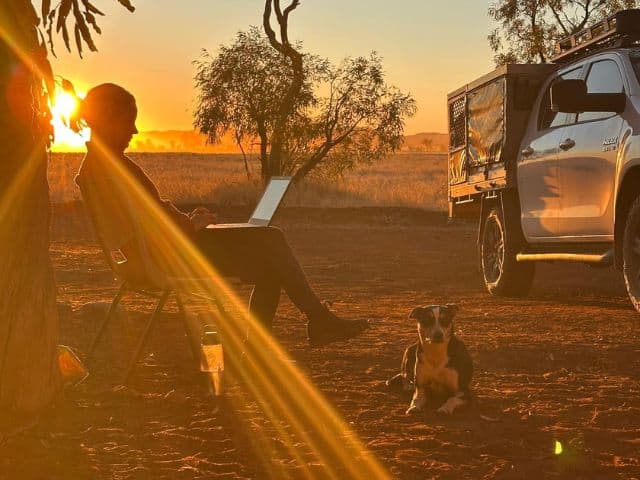
“One of the biggest challenges is being away from home, my pets, and my family, luckily I have a wonderful pet sitter! It’s often hot, the hours are long, and sometimes accommodation is very limited. I’ve definitely slept on a few couches and blow-up beds along the way.
But for me, all of that feels small compared to the impact we’re making. If we don’t go, these pets truly have no access to veterinary care in their communities. A few dusty days away is a small price to pay to make a real difference for animals and their families.
My hope is that families can enjoy healthier pets for longer, feel safe building strong bonds with their animals, and feel empowered knowing that when their pets need help, they can access care.”
Moments that stay with you
For Aimee, returning to communities and seeing the animals thriving is one of the most rewarding parts of the work.
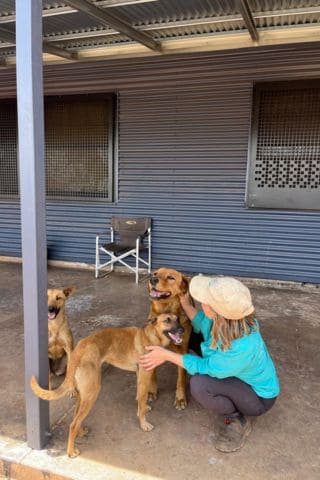
“I love visiting the same places and returning to homes where we’ve desexed animals, seeing them sunbaking on the front veranda, usually a little chunky, but so happy!”
She also enjoys reconnecting with the families in the communities.
“There are some families we visit every few months, and even after so many weeks, when they hear our work car pull up, they all come running down the driveway with their tails wagging!
The kids in these communities remember us too and come to the clinic, curious about everything we do. It’s such a wonderful reminder that the impact we’re making is there, sometimes even more than we realise.”
Why volunteering can be life-changing
Aimee believes volunteering in programs like AMRRIC can have a powerful impact on veterinary professionals.
“I think volunteering can have a profound impact, not just on the communities you serve, but on your own perspective on life. You can learn new skills and connect with others in the industry from all around the country, but more than that, it can really shift the way you see the day-to-day.
When you see firsthand the realities of life for Australians in remote communities, little frustrations, like a long line at the checkout, or not finding a dress in your size, start to feel less significant. Just having access to these things at all is a privilege.”
“I think volunteering can have a profound impact, not just on the communities you serve, but on your own perspective on life.”
Advice for future Veterinary Nurses
For students considering a career in veterinary nursing, Aimee encourages curiosity and openness to new experiences.
“Some of the best opportunities come when you step out of your comfort zone, so try everything and think outside the box.”
The key skills Aimee see’s in the best Vet Nurses are:
- adaptability
- curiosity and
- the ability to anticipate what’s needed in any situation, and then problem-solve to find the best solution.
Supporting future animal care careers in communities
Aimee also shared thoughtful insights about creating opportunities for people in remote communities who want to work with animals.
“Opportunities could be tailored to suit the needs of the community and its members. Many people in remote communities are interested in working with animals but aren’t necessarily drawn to the traditional path of leaving their community to work in a veterinary clinic in a major town.
Offering training that’s directly relevant to the community makes a lot of sense. Skills like first aid, administering anti-parasitics, and other preventative health measures, combined with support from organisations like AMRRIC and guidance from vets as well as local health clinics, can make a real difference.
Not only does it improve animal health, but it also empowers community members to take an active role in the care of their animals.”
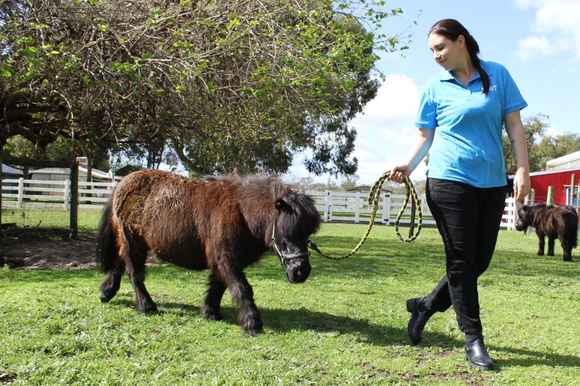
A huge thank you to Aimee for sharing her story and pictures with us, and for the incredible work she continues to do for animals and communities across Australia.
Her journey is a powerful reminder that a career in veterinary nursing can take you in many directions, from clinical practice and rehabilitation to education, outreach and making a difference in communities.
About AMRRIC
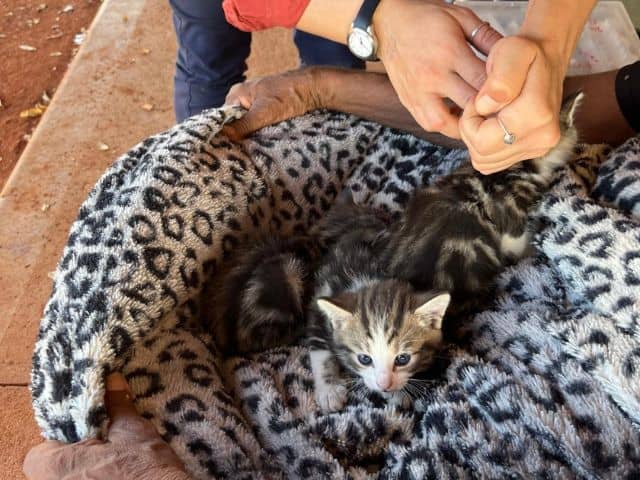
Animal Management in Rural and Remote Indigenous Communities (AMRRIC) is a national not-for-profit organisation that works alongside Aboriginal and Torres Strait Islander communities across Australia to improve the health and welfare of companion animals, particularly dogs and cats.
Through veterinary programs, education and community partnerships, AMRRIC helps manage animal populations, provide access to animal health services and support responsible pet care in areas where veterinary services can be limited. By improving the wellbeing of animals, their work also contributes to healthier, safer communities for the people who care for them.
Find out more about Veterinary Nursing
Want to learn more? Read more posts about Veterinary Nursing here

Courses you may like
On-Site Intensive
ACM20121 Certificate II in Animal Care (Vet Nursing Pathway)
About Vet Nurse Pathway
Vet Nursing Pathway
Online & On-campus
ACM40418 Certificate IV in Veterinary Nursing
About Vet Nursing