
When a mechanical ventilator isn’t available, the ability to perform manual ventilation confidently can be life-saving in veterinary practice.
Discover how to recognise and prevent complications such as hypoventilation, altered lung volume, and atelectasis, and understand how these can lead to hypoxaemia and hypercapnia. Through Caroline’s expert explanations and video demonstrations, you’ll learn correct ventilation techniques and how to confidently use the adjustable pressure-limiting (APL) valve to keep your patients safe under anaesthesia.
Caroline Kaiser
Cert IV VN, GradCertEd, MEd
Caroline began her veterinary nursing career in a mixed practice in New South Wales before gaining specialist experience in anaesthesia, surgery, and intensive care across Australia, Singapore, and the UK.
She has worked as an anaesthesia technician at Murdoch University and as a Trainer and Assessor with AVT. Now based in Johannesburg, she continues to educate and inspire veterinary nurses worldwide.

Absolutely loved it. Caroline has a wealth of knowledge & fantastic educator. Amazing to see all she has achieved with her vet nursing throughout the world & the avenues she's taken - gives great insight for what this profession can lead to.
Watching the recorded webinar again, plus the notes helped a lot. I was able to review what was discussed and finish my notes. I also enjoyed the quiz after.
It was a good course, manual ventilation is something that always makes me nervous, so it was great to delve deeper into understanding and perfecting it! I appreciate the opportunity for continuous professional development.
*Fees, inclusions are subject to change. Includes GST. If you decide to withdraw from study for any reason, refunds are not issued. Please see our policies page for full details.
Industry professionals who would like to update their knowledge on administering anaesthetics and improving their manual ventilation skills in felines and canines.
AVT and non-AVT veterinary nursing students who have completed ACMVET413 Prepare for anaesthesia and monitor animal anaesthesia and analgesia, and have experience assisting with and monitoring anaesthetised patients in practice.
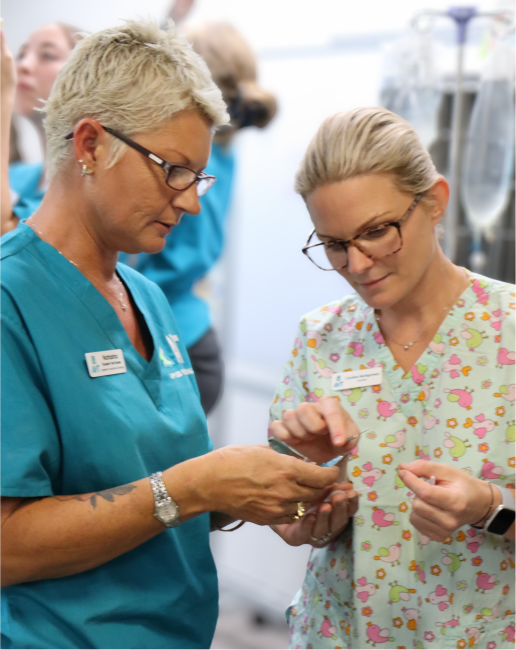

Because we specialise in animal care, behaviour and veterinary training - everything you will learn is based on real industry needs and demands!

91% of AVT graduates are satisfied with their training experience, and 83% were employed after training (NCVER, 2025).
Students consistently tell us how supported they feel. Our trainers are here to guide you and answer your questions and help you stay on track.
About our Behaviour & Training Course
Study Online